
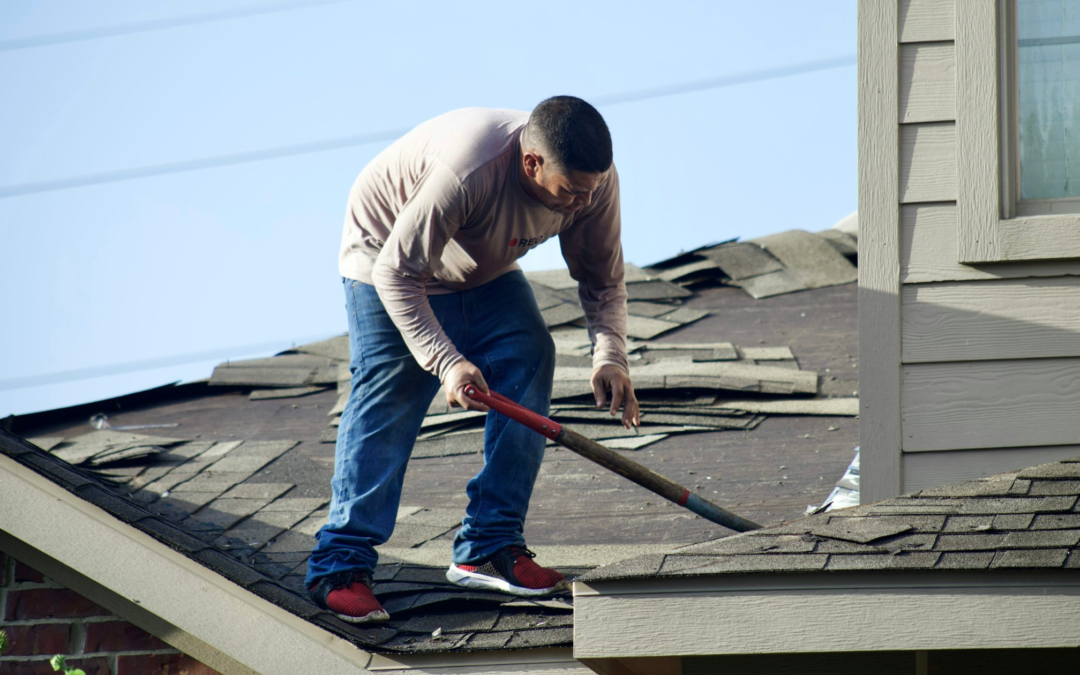
A big storm rolls through, you hear hail hitting the house, and the next morning there are roofing companies all over the neighborhood. It’s pretty easy to start wondering whether your roof needs to be replaced too. Maybe you found a shingle in the yard. Maybe the roof looks completely normal from the driveway. Either way, you probably want to know what you’re dealing with before assuming the worst. That’s how we approach hail damage roof replacement in Overland Park at Roofing Zone. Not every storm-damaged roof needs to be replaced. Sometimes a repair is all that’s needed. Other times, the damage is spread out enough that replacement makes more sense. We have to see what actually happened before we can tell you which situation you’re dealing with.
Storm Damage Isn’t Always Easy to Spot
Some damage practically announces itself. If shingles are lying in your yard or a tree limb is sitting on the roof, you know there’s something to look at. Other damage is much less obvious. Wind can lift a shingle without ripping it completely off the roof. Hail can affect the surface of shingles without leaving a hole you can see from the ground. Flashing, vents, and other parts of the roofing system can take damage too. That’s why we don’t judge a roof based only on whether we see a big bare spot. We want to look at the roof as a whole and figure out whether the storm caused one isolated problem or affected several areas. That distinction makes a big difference.
When Is a Roof Repair Enough?
There are plenty of situations where storm damage can be repaired. Let’s say strong winds damage a small section of shingles, but everything around that area is still in good shape. If we can remove the damaged material, make the necessary repairs, and properly restore that section, replacing the entire roof probably wouldn’t make much sense. When we’re looking at wind damaged roof repair in Overland Park, though, we don’t stop at the first missing shingle. We’ll check the shingles around it. Have they been lifted? Are they still sealed properly? Did wind get underneath a larger area? Is there any indication that moisture reached materials underneath? Sometimes what looks like a three-shingle repair really is a three-shingle repair. Sometimes we get up there and find more going on. We’d rather know that before we start.
What About Hail Damage?
Hail can be a little trickier. A branch might hit one section of a roof. Hail, on the other hand, can hit the entire house over and over again during a storm. That doesn’t mean every hailstorm ruins a roof. Hail size matters. Wind matters. The roofing material matters. The condition of your roof before the storm matters too. When hail hits asphalt shingles, we’re looking for signs that the impacts actually damaged the roofing material. We also want to know whether we’re seeing a few isolated areas or a pattern across multiple sections of the roof. That’s a big part of determining whether hail damage roof replacement in Overland Park needs to be discussed. One questionable area and widespread storm damage are two very different things.
The Age of Your Roof Changes the Conversation
We always want to know roughly how old the roof is. Not because an older roof automatically needs to be replaced, but because age helps us understand what we’re looking at. Think about a relatively new roof that loses a few shingles during a storm. The surrounding shingles may still be flexible and in excellent condition, and matching materials may still be readily available. That can make an isolated repair pretty straightforward. Now picture the same damage on a much older roof. The shingles around the damaged area may already be brittle or worn. They may have significant granule loss. The original shingle may even have been discontinued, making a close match harder to find. As a roofing contractor in Overland Park, we don’t want to look at the birth date of the roof and make the decision from there. We want to look at its actual condition. We’ve seen older roofs where a repair still makes sense. We’ve also seen roofs where the storm exposed problems that were already developing.
“But My Roof Isn’t Leaking”
We hear this quite a bit after storms. And it’s a reasonable thought. If there’s no water coming through the ceiling, how bad could the damage really be? The problem is that a roof doesn’t necessarily start leaking the moment it’s damaged. Water has several layers to get through before you notice a stain inside your house. Depending on what happened, it could take a while for a problem to become obvious indoors. That’s why we don’t use “no leak” as proof that everything is fine. We’re much more interested in whether the roofing system can still do its job.
When Does Replacement Start Making More Sense?
There’s no magic number of damaged shingles where we suddenly say, “Okay, now you need a new roof.” It’s more about the overall picture. If the damage is isolated and the surrounding roof is in good condition, we’re going to look at repair options. If we’re seeing significant damage across several slopes, a large number of affected shingles, compromised roofing materials throughout the roof, or damage on a roof that was already heavily worn, replacement becomes a much more reasonable conversation. We may also find problems underneath the shingles that change the scope of the project. This is where working with a residential roofing contractor in Overland Park matters. If someone is recommending a full replacement, you should be able to ask why and get an answer that makes sense. Better yet, they should be able to show you what they’re seeing.
What Are We Looking for During an Inspection?
When Roofing Zone comes out after a storm, we’re not trying to find one damaged shingle and call it a day. We’re trying to understand what happened. We’ll want to know what you noticed during or after the storm. Did you hear hail? Find shingles in the yard? Notice a new ceiling stain? Did a branch hit the house? Then we look at the roofing system. That can include shingles, flashing, vents, valleys, roof edges, penetrations, gutters, and other areas where storm damage tends to show up. Patterns matter too. If we see similar damage across multiple sections of the roof, that tells us something different than finding one isolated damaged spot. As a residential roofing company in Overland Park, we want you to understand those differences. Roofing isn’t something most homeowners deal with every day. It’s our job to explain what we’re finding without making it more complicated than it needs to be.
Take Pictures of What You Can Safely See
If a storm just came through, a little documentation can go a long way. You don’t need to climb onto your roof. In fact, please don’t. A damaged or wet roof is not the place to be walking around if you aren’t trained and properly equipped. Take pictures from the ground instead. Photograph shingles that landed in the yard, fallen limbs, visible exterior damage, damaged gutters, or anything else that looks different. If water shows up inside, take pictures of that too. It also helps to make a note of when the storm occurred and when you first noticed the damage. If an insurance claim becomes part of the process, keep your photos, estimates, inspection information, and correspondence together. Having everything in one place makes it much easier to keep track of what happened.
What Does Insurance Have to Do With It?
Storm damage and insurance often come up in the same conversation, but we think it’s important to be clear about who does what. Your insurance company determines what your policy covers. Coverage can depend on the cause of the damage, your deductible, exclusions, policy terms, and the insurer’s evaluation. A roofing company in Overland Park shouldn’t guarantee that your insurance company is going to buy you a new roof. Our job is different. We can inspect the roof, document the roofing conditions we observe, explain what needs to be repaired or replaced, and provide information about the roofing work. Questions about whether something is covered ultimately need to be answered by your insurance carrier or agent.
Your Neighbor Got a New Roof. Does That Mean You Need One?
Not necessarily. We understand why homeowners ask this. If several houses on your street are getting new roofs after the same storm, it’s natural to wonder about yours. But neighboring roofs don’t always experience storms exactly the same way. One house may have an older roof. Another may have different shingles. Wind direction, roof orientation, trees, hail size, previous damage, and the condition of the roofing materials can all change the outcome. That’s why we want to inspect your roof instead of assuming it matches the house next door. A decision about hail damage roof replacement in Overland Park should be based on what happened to your home.
Let’s Find Out What Actually Happened
Storms are stressful enough without immediately assuming you’re facing a full roof replacement. At Roofing Zone, we’d rather start with the roof in front of us. We’ll look at the damaged areas, check the surrounding materials, consider the age and condition of the roof, and figure out whether the problem can reasonably be repaired. If repair makes sense, we’ll explain what needs to be done. If the damage is widespread enough that replacement should be considered, we’ll show you what we’re seeing and explain why. You don’t have to figure it out from the driveway. If a recent storm has you wondering about your roof, having an experienced roofing contractor in Overland Park take a look can give you something much more useful than a guess: a clear idea of what happened, what needs attention, and what your options are from here.
At Roofing Zone, we make protecting your home simple so you can focus on everything else that matters.

We provide clear recommendations, quality materials, and dependable workmanship built to last. No shortcuts. No surprises. Just honest roofing solutions from a team that stands behind every job. Ready to get started? Call us at (913) 310-0010 or fill out the form on our Contact Us page.
Follow Roofing Zone on Facebook to see our latest projects and updates.