
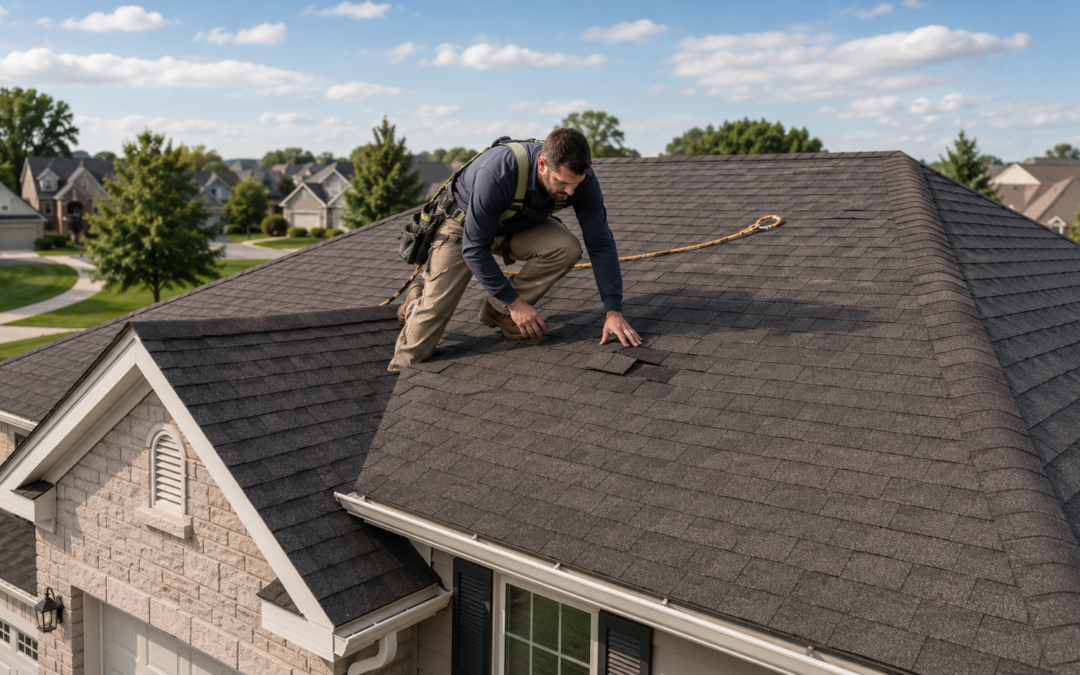
A roof problem can leave you with more questions than answers. Is that ceiling stain caused by the roof? Can a few missing shingles be repaired? Does an older roof automatically need to be replaced? Should you call a roofing contractor now, or can the problem wait?
The answers depend on what happened, where the damage is located, how much of the roofing system is affected, and the condition of the roof as a whole. A leak does not always mean you need a new roof. At the same time, a problem that looks small from the ground can extend beyond the one area you can see.
This guide is designed to help homeowners understand those possibilities. It explains common warning signs, what happens during a professional evaluation, how contractors compare repair with replacement, and what to expect as you plan the work. It also connects you with more detailed Roofing Zone resources when you need to explore one question more deeply.
The purpose is not to diagnose your roof without seeing it. It is to help you ask better questions, understand the recommendations you receive, and choose an appropriate next step.
In This Guide
- Start With the Question That Brought You Here
- Warning Signs Your Roof May Need Attention
- What to Do When You Discover a Problem
- What Happens During a Professional Roof Evaluation
- When a Roof Can Be Repaired
- When Roof Replacement May Make More Sense
- How Storm Damage and Roof Age Affect the Decision
- Understanding Roofing Estimates
- Questions to Ask a Roofing Contractor
- Preparing for Roof Repair or Replacement
- Explore Roofing Services in Overland Park
- Related Roof Repair and Replacement Resources
- Frequently Asked Questions
Start With the Question That Brought You Here
Roof problems do not all begin the same way. Choose the situation that most closely resembles yours:
- You found a stain, drip, or other sign inside your home: Begin with Is a Small Roof Leak Really a Big Deal? and the warning signs below.
- You can see missing, cracked, or damaged shingles: Review the signs that may point to repair and arrange an evaluation if the cause or extent is unclear.
- A hailstorm or windstorm recently passed through: Document visible conditions and use Roofing Zone’s storm-damage resources before permanent work begins.
- The roof is getting older or has needed repeated repairs: Go to the repair-versus-replacement section.
- You are preparing to meet with a contractor: Review the inspection, estimate, and contractor-question sections.
- You already know which service you need: Visit Roofing Zone’s roofing services to reach the appropriate service page.
What Are the Warning Signs of a Roof Problem?
Some roof problems announce themselves with an active leak. Others develop gradually and are discovered during routine maintenance, after a storm, or when a contractor inspects an unrelated area.
Interior warning signs
Pay attention to changes inside the home, including:
- Water stains on a ceiling or wall
- Peeling paint near the ceiling
- Damp insulation or musty odors in the attic
- Water around a chimney, vent, skylight, or other roof penetration
- Unexplained moisture after rain or melting snow
- Daylight visible through an unfinished attic roof deck
A stain does not necessarily appear directly below the damaged roofing material. Water may enter at one point, travel along decking or framing, and become visible somewhere else. That is one reason simply covering the stain or sealing the most obvious exterior spot may not resolve the source.
Even an intermittent leak deserves attention. Water may enter only when rain is driven from a certain direction or when wind lifts a vulnerable section. The fact that a leak stops when the weather changes does not mean the underlying opening repaired itself.
For a closer look at why a modest symptom can matter, read Is a Small Roof Leak Really a Big Deal?.
Exterior warning signs
From a safe location on the ground, homeowners may notice:
- Missing, lifted, curled, cracked, or displaced shingles
- Roofing materials or shingle pieces in the yard
- Loose or visibly damaged flashing
- Dark, worn, or irregular areas on the roof surface
- Granules collecting in gutters or near downspouts
- Sagging or uneven rooflines
- Debris resting on the roof
- Damage around vents, chimneys, or other penetrations
- Gutters or downspouts that are loose, bent, or pulling away
These observations can help you explain the problem, but they do not establish the full scope. A missing shingle may be an isolated repair. It may also be one visible result of wind affecting a wider section. Granules can be displaced by normal wear as well as storms. An evaluation puts those clues into context.
Problems that may remain hidden
Not every roofing issue can be seen from the driveway or from inside a finished room. Water can affect decking, underlayment, insulation, or other components before a homeowner notices an obvious interior symptom. Storm impacts may also be difficult to distinguish from ordinary aging without a closer look.
That does not mean every roof is concealing major damage. It means the visible symptom should be treated as a starting point rather than a complete diagnosis. Could Your Roof Be Hiding More Damage Than You Think? explains why the surface appearance and the full condition of a roofing system are not always the same.
What Should You Do When You Discover a Roof Problem?
First, protect people and the interior of the home. Do not climb onto a wet, steep, damaged, or storm-affected roof. Move belongings away from active water when it is safe, collect dripping water, and document visible conditions.
Then create a simple record:
- Note when you first noticed the problem.
- Record whether it appeared during or after particular weather.
- Photograph accessible interior and exterior signs.
- Note whether the problem has happened before.
- Gather information about earlier roof work if it is available.
- Arrange a professional evaluation when the source, extent, or correct repair is uncertain.
Temporary protection may sometimes be necessary to prevent additional water from entering. Permanent work should be based on an understanding of the source and scope rather than the most obvious symptom alone. When storm damage and insurance may be involved, documentation should also be preserved before permanent repairs remove evidence of the original condition.
When is professional help appropriate?
Consider contacting a roofing contractor when:
- Water is entering the home
- Shingles or roof components are missing or visibly displaced
- A recent storm may have affected the property
- The same area has required repeated attention
- You cannot safely observe the suspected problem
- The source of the moisture is unclear
- The roof is older and showing several different symptoms
- You need to compare repair with replacement
The scheduled article When Should You Call a Roofing Contractor for Roof Repair? will provide a more detailed decision checklist.
Homeowners who are ready for an evaluation can learn more about residential roof inspections in Overland Park.
What Happens During a Professional Roof Evaluation?
A professional evaluation should move the conversation from “Something looks wrong” to “Here is what is happening and why this response is recommended.” The exact process depends on the home and the reported concern, but it may include several areas.
Understanding the history
The contractor may begin by asking when you noticed the problem, whether it appears during particular weather, whether the roof has been repaired before, and whether a recent storm affected the property. These details help distinguish an isolated current event from a recurring or developing condition.
Examining the roofing system
The inspection may consider roofing materials, flashing, penetrations, vulnerable transitions, drainage components, and other accessible areas. When interior symptoms exist, accessible attic or interior areas may provide additional evidence about where water traveled and how long the condition may have been present.
Determining the scope
The most important conclusion is not simply whether damage exists. It is how much of the system is affected and what work would address the cause. The recommendation may involve maintenance, a localized repair, work across a larger section, or replacement.
Explaining the next step
Homeowners should leave the evaluation with an understandable explanation. Ask what was found, what caused the problem if that can be determined, what areas are affected, why the proposed work is appropriate, and what could happen if the issue is postponed.
An inspection is valuable because repair and replacement decisions depend on the roof in front of the contractor—not on one universal rule. The age of the roof matters, but so do its condition, installation, materials, damage pattern, and repair history.
Can the Roof Be Repaired?
Repair is generally intended to correct a defined problem while leaving the sound remainder of the roofing system in place. That may be appropriate when damage is limited, and the surrounding roof can continue performing properly.
Conditions that may support repair include:
- Damage concentrated in a smaller, identifiable area
- A problem connected to a particular flashing detail or penetration
- Missing or displaced materials that can be addressed without disturbing a much larger section
- A roofing system that remains in serviceable condition overall
- Compatible materials that can be obtained
- No evidence that the symptom represents broad deterioration
These are considerations, not a promise that a particular roof can be repaired. Access, material compatibility, the condition of adjacent roofing, and what is found beneath the surface can affect the recommendation.
How Do You Know a Roof Problem Can Be Repaired Instead of Replaced? explores the repair side of the decision in more detail.
What does a successful repair need to accomplish?
A repair should address the source of the problem, not merely disguise the visible result. For example, repainting a ceiling stain does not stop water entry. Applying sealant without determining why materials moved or failed may not address the underlying issue.
A useful repair recommendation should explain:
- What component or area needs attention
- Why that area is causing or contributing to the problem
- What work is proposed
- Whether adjacent materials must be disturbed
- Whether additional conditions could be discovered once work begins
- How the repair fits the overall condition of the roof
When can repeated repairs become a warning sign?
One appropriate repair can extend the useful service of an otherwise sound roof. A pattern of recurring repairs may tell a different story. If new problems continue developing in separate locations, or if the same location repeatedly fails, the homeowner should ask whether isolated work is still the most sensible long-term approach.
Repeated repairs do not automatically make replacement necessary. They do make it reasonable to compare the cumulative work, remaining roof condition, and likelihood of additional failures.
When Might Roof Replacement Make More Sense?
Replacement addresses the roofing system more broadly. It may become the more practical option when damage or deterioration is widespread, when repairs would leave too many unresolved concerns, or when the existing system cannot support a reliable localized solution.
Factors that may point toward replacement include:
- Widespread deterioration rather than one defined failure
- Damage across several areas or roof slopes
- Multiple recurring leaks or repairs
- Roofing materials that are brittle, extensively worn, or difficult to integrate with new materials
- Problems involving more than the visible surface
- A repair scope that would cover a substantial portion of the roof
- An aging roof whose overall condition raises concern about additional near-term work
The decision should not be reduced to age alone. Two roofs installed around the same time may be in different condition because of materials, workmanship, ventilation, maintenance, weather exposure, design, and earlier damage. Age provides context; the evaluation supplies the evidence.
Read When Is It Really Time to Replace an Old Roof? for a deeper discussion of age and condition.
Repair versus replacement at a glance
| Question | Repair may be considered when… | Replacement may be considered when… |
| How much is affected? | The concern is localized | Damage or deterioration is widespread |
| What is the rest of the roof like? | Surrounding areas remain serviceable | Several areas show significant wear or failure |
| Has this happened before? | The issue is isolated | Repairs or leaks keep recurring |
| Can materials be integrated? | Compatible materials and sound adjacent areas allow appropriate work | Existing materials or surrounding conditions make integration impractical |
| What will the work resolve? | A defined repair addresses the cause | Repair would leave substantial unresolved risk |
| What is the long-term outlook? | The remaining roof can reasonably continue performing | Additional near-term problems appear increasingly likely |
This table helps organize the discussion, but it is not a substitute for examining the roof. A contractor should be able to show how the recommendation relates to the observed conditions.
Is It Time for a New Roof or One More Repair? provides another focused comparison. Because this article and other planned topics cover similar ground, each should be kept narrower than this guide rather than repeating the full decision framework.
When replacement is the appropriate path, Roofing Zone’s residential roof replacement in Overland Park page explains the local service and next steps.
How Do Storm Damage and Roof Age Affect the Decision?
Storm damage creates a slightly different decision path because the roof may have changed suddenly rather than through gradual aging. Hail, wind, falling limbs, and wind-driven debris can affect roofing materials, flashing, vents, gutters, and other exterior components.
A newer roof is not automatically immune to storm damage. An older roof is not automatically entitled to replacement after a storm. The evaluation must distinguish the event-related condition from ordinary wear and determine how the affected areas relate to the roof as a whole.
After a storm, homeowners should:
- Observe the home from a safe location
- Photograph visible damage and debris
- Look for roofing material on the ground
- Check accessible interior areas for moisture
- Record the storm date
- Avoid walking on the roof
- Arrange an inspection when damage is visible or suspected
- Preserve documentation when an insurance claim may be considered
For hail-specific guidance, use Could Hail Damage Be Worse Than It Looks? and Does Hail Damage Always Mean You Need a New Roof?. The second URL should eventually be replaced with a descriptive permalink and the existing numeric address redirected.
Because storm response and insurance form a substantial topic of their own, this pillar only provides the decision context. Detailed storm steps will eventually belong to a separate Storm Damage and Roof Insurance pillar. Roofing Zone’s current storm damage roof repair page for Overland Park should remain the destination for homeowners seeking that specific local service.
What Should a Roofing Estimate Help You Understand?
An estimate is more useful when it explains the proposed scope instead of presenting one unexplained total. The details vary with the project, but a homeowner should be able to understand what work is included, which areas are involved, what materials are proposed, and what circumstances could change the final scope.
For repair work, ask:
- Which area is being repaired?
- What condition is the repair intended to correct?
- Will nearby materials need to be removed or replaced?
- Are interior or underlying conditions included?
- What happens if additional damage is found?
- What workmanship coverage applies to the completed repair?
For replacement work, the estimate may need to address:
- Removal and disposal of existing materials
- The replacement roofing material
- Underlayment, flashing, and other system components
- Treatment of penetrations, valleys, edges, or transitions
- Work involving gutters or related exterior components, when applicable
- How unforeseen decking or structural conditions will be handled
- Project timing and site preparation
- Payment terms and financing arrangements
- Applicable product and workmanship warranty information
The scheduled article What Should Be Included in a Roof Replacement Estimate? will provide a more detailed checklist.
Why the lowest estimate is not automatically the same value
Two estimates can have different totals because they propose different work. One may include removal, flashing, underlayment, ventilation work, or disposal that another leaves unclear. Materials, warranties, handling of unforeseen conditions, and the contractor’s process can also differ.
Compare the scope line by line. If an item appears in one estimate but not another, ask whether it is unnecessary, excluded, or simply unstated. A clear comparison helps you evaluate the work rather than choosing from totals that may not represent the same project.
If funding is part of the planning process, Roofing Zone provides information about residential roof financing options.
What Questions Should You Ask a Roofing Contractor?
The contractor you choose affects both the recommendation and the experience of completing the work. A productive conversation should give you confidence that the company understands the problem, can explain the proposed solution, and has a clear process.
Consider asking:
- What did you find during the inspection?
- What do you believe caused the problem?
- Which areas are affected?
- Why are you recommending repair or replacement?
- Are there reasonable alternatives?
- What is included in the estimate?
- What might change once work begins?
- Who will be responsible for communication?
- What should the homeowner do before the project starts?
- What warranty information applies?
The goal is not to challenge every professional conclusion. It is to make sure you understand the reasoning and can compare recommendations meaningfully.
Would You Know the Right Questions to Ask a Roofer? expands this into a practical contractor-conversation resource.
Look for clarity, not pressure
A homeowner should have room to understand the recommendation. Clear photographs, descriptions, measurements, or written scope details can make the decision easier to evaluate. Be cautious when the explanation relies only on urgency without connecting that urgency to observable conditions.
Some roof problems do require prompt attention, especially when water is entering or materials have been displaced. Even then, the contractor should be able to explain what requires immediate protection, what permanent work is proposed, and why.
Verify the information that matters to your project
Ask about licensing, insurance, warranties, business history, scheduling, materials, cleanup, and communication as they apply to the work. Do not rely only on a general statement that a contractor is “the best.” Look for information you can understand and verify.
Roofing Zone identifies itself as a local veteran-family-owned company and states that it is licensed and insured, has an A+ BBB rating, is registered with Kansas as a roofing contractor, and maintains a Johnson County contractor’s license. These company statements should be periodically checked before the pillar is published or substantially updated.
How Should You Prepare for Roof Repair or Replacement?
Once you approve a scope, ask the contractor what needs to happen before work begins. Preparation depends on the project, but it may include moving vehicles, protecting items in the attic, securing fragile wall decorations, discussing pets and children, identifying exterior access points, and understanding how debris and materials will be handled.
Before the project
- Confirm the scope and payment terms in writing.
- Ask who will be your main contact.
- Discuss the anticipated schedule and weather contingencies.
- Learn where materials, equipment, or a disposal container may be placed.
- Move vehicles and outdoor items when requested.
- Protect or relocate sensitive belongings in accessible attic areas.
- Tell the contractor about gates, pets, landscaping concerns, or property-access limitations.
During the project
- Keep children and pets away from the active work area.
- Use the designated contact for questions or scope changes.
- Do not walk through debris or equipment areas.
- Ask for an explanation when an unforeseen condition affects the planned work.
After the project
- Review the completed work with the contractor.
- Ask about cleanup and any final inspection process.
- Retain the contract, invoice, warranty information, photos, and related records.
- Learn what maintenance or observation is recommended.
Preparation cannot eliminate every inconvenience, but it makes expectations clearer. Roof Repairs Are Never Fun – Here’s 5 Ways You Can Make Things Easier on Yourself may eventually support this section, but its current link is a preview URL.
Explore Roofing Services in Overland Park
This pillar answers broad homeowner questions. Roofing Zone’s landing pages provide the next step for people seeking a particular service in Overland Park. Keeping those roles separate allows this guide to explain the decision while the landing pages remain focused on helping local homeowners schedule the right service.
Does your roof have a leak or localized damage?
Learn more about residential roof repair in Overland Park. This is the appropriate destination for homeowners who are ready to discuss repairing leaks, damaged shingles, or other defined roof problems.
Do you need to understand the condition of your roof?
Explore residential roof inspections in Overland Park. An inspection can help identify damage, document conditions, and clarify whether repair or replacement should be considered.
Has roof replacement been recommended?
Review residential roof replacement in Overland Park to learn about the local replacement service and prepare for the next conversation.
Was your home affected by hail or strong winds?
Visit Roofing Zone’s page about storm damage roof repair in Overland Park for the service pathway involving hail damage, wind damage, storm inspections, repair, and replacement.
The broader areas Roofing Zone serves page can help homeowners in other Kansas City-area communities find the appropriate local pathway.
This separation protects the purpose of each page:
- Pillar page: Broad education, comparison, planning, and navigation
- Supporting article: One narrower homeowner question
- Service page: Details about the work Roofing Zone provides
- Location page: Roofing services available in a specific market
Keeping these jobs distinct helps readers reach the right information and reduces the chance that several pages compete for the same search intent.
Related Roof Repair and Replacement Resources
Use these detailed Roofing Zone articles to explore the questions most relevant to your roof. Each resource examines one part of the larger repair-or-replacement decision.
Recognizing Roof Problems
- What Are the Signs You Need Residential Roof Repair?
- Could Your Roof Be Hiding More Damage Than You Think?
- Is a Small Roof Leak Really a Big Deal?
Comparing Repair With Replacement
- How Do You Know a Roof Problem Can Be Repaired Instead of Replaced?
- Is It Time for a New Roof or One More Repair?
- When Is It Really Time to Replace an Old Roof?
- How Do You Know When Roof Replacement Is the Better Call?
Preparing to Work With a Roofer
Frequently Asked Questions About Roof Repair and Replacement
Does a roof leak always mean the roof must be replaced?
No. A leak may come from a localized repairable problem, but it can also be connected to broader deterioration or damage. The source, affected area, surrounding materials, and overall roof condition should be evaluated before deciding between repair and replacement.
Can you determine roof damage from the ground?
Ground-level observations can reveal missing materials, debris, or obvious changes, but they may not show the source or full extent. Do not climb onto a damaged or wet roof. A professional inspection is appropriate when the condition cannot be safely or clearly understood.
Is roof age enough to decide that replacement is necessary?
Age is one factor, not the entire decision. Material, installation, maintenance, ventilation, exposure, repair history, storm damage, and current condition can all affect how a roof performs.
When is a roof repair usually considered?
Repair may be considered when the problem is defined and localized, the surrounding roofing system remains serviceable, and the proposed work can address the cause without leaving larger unresolved concerns.
When may replacement be the more practical option?
Replacement may be considered when damage or deterioration is widespread, several areas are failing, repairs keep recurring, materials cannot be integrated appropriately, or an isolated repair would leave substantial concerns elsewhere.
Should I get more than one roofing estimate?
Homeowners may choose to compare contractors and estimates. When doing so, compare the proposed scope, materials, exclusions, handling of unforeseen conditions, payment terms, timing, and warranty information—not just the total price.
Can a roofing contractor tell me whether insurance will cover the work?
A contractor can inspect and document roof conditions and explain the recommended work. Coverage decisions depend on the homeowner’s policy and insurer. Avoid treating a contractor’s repair or replacement recommendation as a guarantee of insurance coverage.
Should I wait if the leak is small?
A small or intermittent leak can still allow moisture into areas you cannot see. Protect the interior, document the symptom, and arrange an evaluation rather than assuming the problem will remain small.
Choose the Right Next Step
You do not need to diagnose the entire roofing system before asking for help. Start with the pathway that fits your situation.
If you found an active leak
Protect the interior, document what you can safely observe, and arrange an evaluation. Begin with Is a Small Roof Leak Really a Big Deal?.
If you noticed visible exterior damage
Review What Are the Signs You Need Residential Roof Repair? and learn about residential roof repair in Overland Park when the condition needs professional attention.
If a storm recently affected your home
Document the event and visible conditions, avoid climbing onto the roof, and follow the appropriate storm-damage pathway. Overland Park homeowners looking for local service can review storm damage roof repair in Overland Park.
If repairs keep recurring
Compare the affected areas, repair history, surrounding roof condition, and long-term outlook. Use Is It Time for a New Roof or One More Repair? as your focused decision resource.
If replacement has been recommended
Ask the contractor to explain the findings and scope. Review residential roof replacement in Overland Park and compare the written estimate carefully.
If you are still unsure
An inspection can give you the information needed to choose the next step. Roofing Zone’s role is to evaluate the roof, explain the findings, and help you understand whether repair or replacement is appropriate for the conditions found.